Dan Driscoll, the 39-year-old army secretary often nicknamed President Trump’s “drone guy,” has emerged unexpectedly as a key player in recent U.S.
efforts to shape a peace process for the Russia-Ukraine war.
A relative newcomer to diplomacy, Driscoll is the youngest person to hold the army secretary post.
He has built a reputation inside the administration for pushing new battlefield technologies and a broader agenda to modernize the Army.
Driscoll’s rise is closely tied to his relationship with Vice‑President JD Vance.
The two met at law school and stayed close; Vance tapped him to join the Trump campaign after being picked as the running mate.
Before joining the administration, Driscoll served as an Army officer from 2007, led a cavalry platoon and deployed to Iraq in 2009.
He later earned a law degree and worked in finance, but had not held elected office.
After swift Senate confirmation, his influence expanded beyond traditional Army issues.
He took on a visible role in deploying the National Guard to U.S.
cities and served briefly as acting director of the Bureau of Alcohol, Tobacco, Firearms and Explosives.
His diplomatic profile rose sharply after a leaked 28‑point proposal on the Ukraine conflict drew concern from Kyiv and European partners.
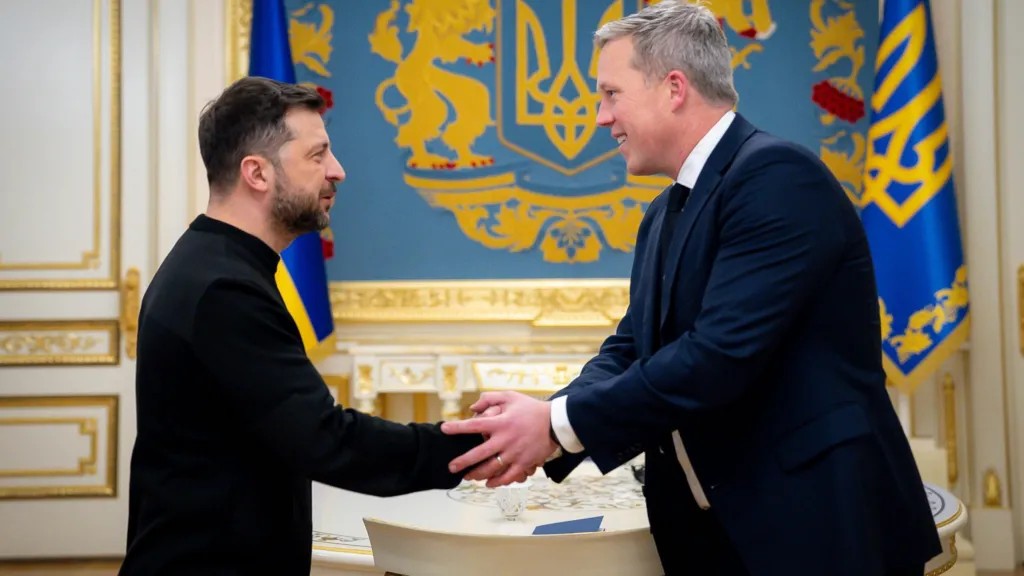
Driscoll traveled unannounced to Kyiv with senior Pentagon officials—the most senior U.S.
military delegation to visit since the administration took office—and met President Volodymyr Zelensky.
He then joined follow-up discussions in Geneva alongside Secretary of State Marco Rubio, Trump envoy Steve Witkoff and Jared Kushner to refine the framework.
Reports also say Driscoll held talks with Russian interlocutors in Abu Dhabi.
The White House has signaled a split role in negotiations: Witkoff is set to engage directly with Moscow while Driscoll handles discussions with Ukraine.
That arrangement highlights how quickly the army secretary has been pulled into high-stakes diplomacy despite limited foreign‑policy experience.
Inside Washington, some observers wonder whether Driscoll’s combination of military credentials and political ties could position him for a larger national-security post in the future, or for a formal envoy role when current envoys rotate out.
Driscoll has been vocal about transforming the Army through technology.
He argues that inexpensive, mass-produced drones and artificial intelligence will reshape how soldiers fight, and that accelerating that shift is essential to maintain an edge.
Still, critics note he lacks a long track record on Russia‑Ukraine issues or in international negotiation.
His rapid ascent underscores how personal connections and a technology-first message have propelled him from Army administrative duties into the center of a sensitive diplomatic effort.