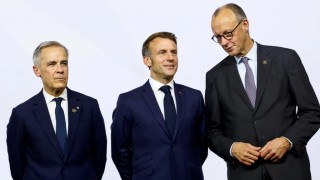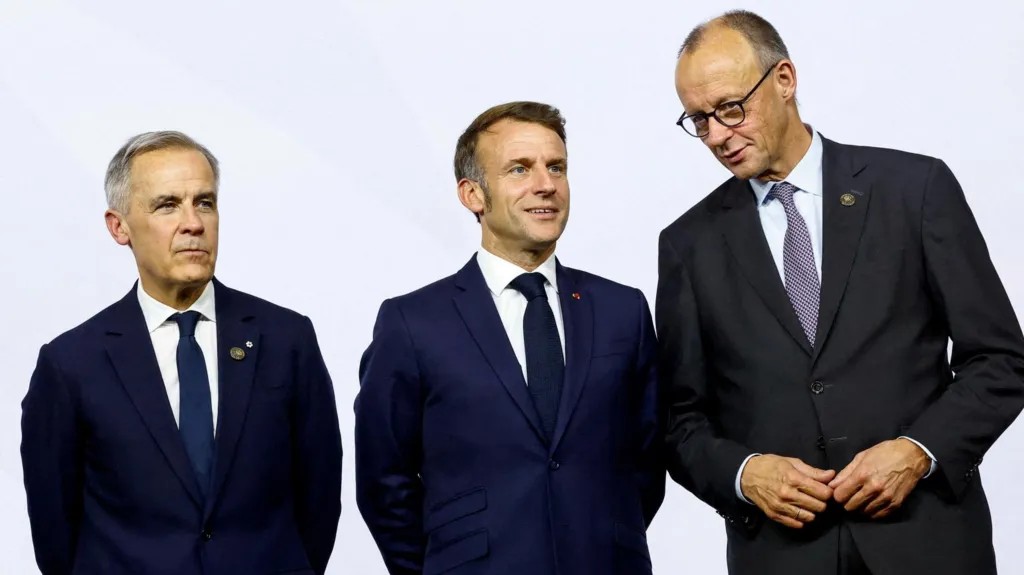
The United States has publicly claimed authorship of a controversial 28-point blueprint intended to end the war in Ukraine, after reports that the document was being characterised by some as favouring Russia. Senator Marco Rubio, who has been involved in discussions over the plan, insisted the proposal was produced by the US and incorporated feedback from both Russian and Ukrainian sources. His comments came after fellow Republican Senator Mike Rounds told a gathering that he had been told the draft did not represent official American policy and described it as more aligned with Russian priorities. Rounds said the paper was presented to Steve Witkoff — who serves as a diplomatic envoy for President Donald Trump — by someone he understood to be acting on behalf of Russia, and that it was not an American recommendation. The State Department swiftly rebutted that account. Spokesperson Tommy Pigott called Rounds’s report "blatantly false," and Rubio later posted that the plan was indeed authored in Washington with input from both sides. The draft has not been released in full, but widely reported leaks describe major concessions that alarm Ukraine and many of its Western partners. Key elements reportedly would see Kyiv pull back troops from parts of the Donetsk region it currently controls, accept de facto Russian authority over Donetsk and Luhansk, and acknowledge Russia’s 2014 annexation of Crimea. The plan is also said to propose freezing the frontiers of the Kherson and Zaporizhzhia regions along current battle lines and imposing limits on the size of Ukraine’s armed forces. It would, according to the draft, provide "reliable security guarantees" for Ukraine, though the specifics remain vague in the leaked summaries. The document is also said to presuppose that Russia will refrain from further aggression and that NATO enlargement would not continue — provisions that have raised alarm among several European capitals. European leaders have pushed back publicly. At the G20 summit in Johannesburg, a joint statement from a group of US allies warned that the proposal in its present form could leave Ukraine exposed to future attack, even while acknowledging it contained elements that might contribute to a just and lasting peace. The statement was signed by the leaders of Canada, Finland, France, Ireland, Italy, Japan, the Netherlands, Spain, the UK, Germany and Norway, along with two senior EU officials. French President Emmanuel Macron said a settlement "cannot simply be an American proposal," stressing that any deal must secure the safety of all Europeans. German Chancellor Friedrich Merz warned that negotiators remained far from a broadly acceptable outcome. British Prime Minister Keir Starmer spoke by phone with both President Volodymyr Zelensky and President Trump as talks continued. President Trump has pushed for Kyiv to accept the framework swiftly, at one point giving Ukraine a deadline that could be extended if negotiations progressed. Vice-President J.D. Vance defended the initiative, arguing critics either misunderstand the proposal or ignore the realities on the ground, and warning against the idea that simply supplying more weapons and money guarantees victory. For its part, Ukraine has expressed deep reservations. President Zelensky warned that Kyiv faces one of its most difficult moments under pressure to sign on. He also announced that his chief of staff, Andriy Yermak, will lead Ukraine's negotiating team in future talks, saying his representatives know how to protect Ukrainian national interests and prevent another large-scale invasion. Rubio and Witkoff were scheduled to travel to Geneva for further meetings with Ukrainian and European security officials, alongside representatives from the UK, France and Germany, as the debate over the proposal’s origins and substance continued. Russian President Vladimir Putin has suggested the draft could serve as a basis for a settlement, even as Kyiv and many of its partners signal that substantial revisions would be required for the plan to gain broad acceptance.