 Getty Images
Viktor Orban's Fidesz government in Hungary stands accused of mass voter intimidation in a film released on Thursday ahead of 12 April parliamentary elections, in which the ruling party is trailing in the opinion polls.
The Price of the Vote documentary film, which aired on Thursday evening at a Budapest cinema and on YouTube, presents the results of a six-month investigation by independent filmmakers and reporters.
In the film, voters, mayors, former election officials and a police officer claim that large sums of money and even illegal drugs are being offered to pressure people to vote for Fidesz.
Fifty-three of Hungary's 106 individual constituencies and up to 600,000 voters are targeted, the film alleges – potentially 10% of the expected turnout of six million.
After 16 years of Fidesz rule under Orban, most recent polls indicate that the party is trailing Peter Magyar's centre-right opposition party Tisza by at least that margin.
 EPA
EPAAll the constituencies involved are rural or small-town communities, increasingly dominated by Fidesz since 2010.
The film portrays a rural Hungary made up of a patchwork of poor villages, home especially to the country's large Roma minority.
Local mayors exercise an iron grip over daily lives, providing work, firewood, transport to polling stations and, in one case, even access to medicine, in exchange for the "correct" vote on election day, according to claims made in the film.
The BBC has reached out to individual government ministers, and the communications offices of the government, the interior ministry, and the national police for a reaction.
The only response so far has been from Minister for Public Administration and Regional Development Tibor Navracsics, who is seen as a moderate.
"If there is any wrongdoing just let the ministry of interior do its job," Navracsics replied. He declined to comment on specific allegations in the film.
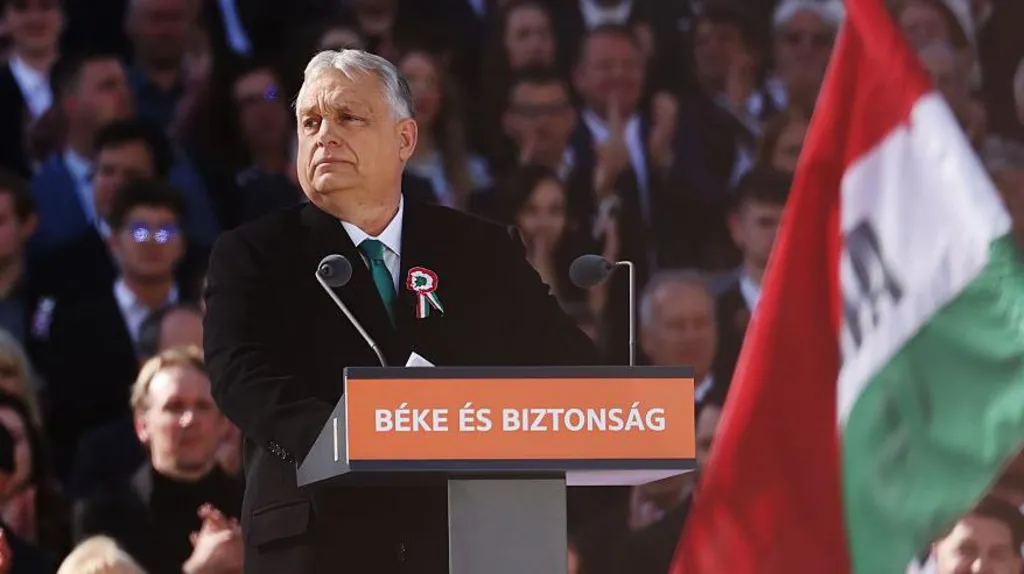
It was in January that Viktor Orban addressed a large gathering of local mayors and village and town councillors in Budapest: "Mayors, ladies and gentlemen, the situation is the following: this election must be won by you."
"The 2026 election will be decided by whether you get involved. If you do, we'll win; if you don't, we won't."
 De Akcióközösség
In the film, Orban's words are juxtaposed with interviews with around 20 figures across 14 of Hungary's 19 counties, from the south to the north-east.
The sheer extent of the practice, and the similarity of the stories in villages tens or hundreds of kilometres apart led the filmmakers to conclude that the action is planned by senior Fidesz officials.
"In the beginning, we thought the key piece of this process is vote-buying. But then we realised that the money is just the icing on the cake. The key word here is dependency and vulnerability," Aron Timar, one of the filmmakers, told the BBC.
"The money comes in on a pretty serious scale, and with quite a large entourage," says one interviewee, a serving police officer whose face and voice is disguised, in the documentary.
"I didn't become a police officer to serve a corrupt system. To help cover things up."
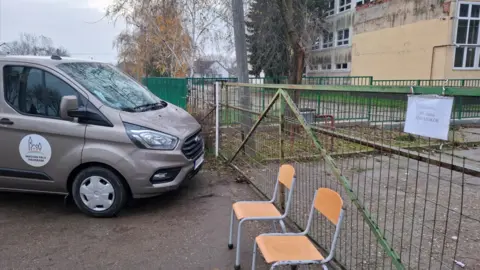
In one village, the Fidesz mayor is also the district doctor for a catchment area covering 32 settlements. Patients say they fear they will not receive their prescription if they do not vote for the party.
Firewood is only distributed to those who vote for the party, several people interviewed claim.
In another, a former candidate dropped his bid for elected office, after the child protection office allegedly threatened to take his children into care.
The authorities did not want him running against the candidate preferred by the governing Fidesz party, he claims.
 De Akcióközösség
One day after the crew filmed in a certain village, the police allegedly visited the hotel where they stayed to ask for the guest list.
"We believe that most of the policemen in the country are fair people. So this is not about the police force. This is more about the political influence on the police," filmmaker Timar told the BBC.
For voters offered money, the sum mentioned is usually 50-60,000 forints (£110-£133) per vote - a significant sum in communities where child benefit is only £26-£43 per child per month.
But the filmmakers emphasise that what they describe is far more than a vote-buying operation.
At previous elections, some of the villages cited in the film have recorded votes of 80%-100% for Fidesz.
Practices alleged by characters in the film include the provision of cars and minibuses on election day, voters pretending to be illiterate in order to obtain a "companion" in the voting booth, photographs of voting slips to prove a vote for Fidesz, and chain voting.
There have been allegations of vote buying in Hungarian elections before, but on a far smaller, localised scale, and without any claim of a significant impact on the outcome.
A significant proportion of Hungary's estimated 800,000 Roma minority live in deep poverty. According to Hungary's state-supported Maltese charity, 270,000 of them live in the 300 poorest settlements in Hungary.
One of the most shocking allegations made by several characters in the film is that "crack" or "smoky" – a cheap and highly addictive synthetic drug widely used in poor villages - is also being used to buy votes.
Hungary under the Fidesz government has some of the toughest drug criminalisation laws in Europe.
Police reports suggest a growing epidemic of drug use in poor settlements. A single dose, burnt in an aluminium foil package and inhaled through the nose, costs only 1,500 forints - little more than £3.
To tackle the crack epidemic, the Delta programme of the Hungarian police was set up in March 2025.
Critics say it is ineffective. "They arrested 12 people; 10 were released; one was held for 24 hours," one character tells the interviewer.
 AFP via Getty Images
The film has been released with little more than two weeks to go before Hungarians go to the polls, and the campaign has been shrouded by almost daily claims alleging domestic and foreign plots to undermine a fair vote.
Fidesz officials, including the prime minister, allege interference by the EU and Ukraine to prevent a fifth consecutive Orban victory.
Independent media, and the opposition Tisza party, allege Russian involvement in support of Orban, who is seen as Vladimir Putin's closest partner in the European Union.
Recently the Washington Post reported an alleged proposal by the SVR Russian Foreign Intelligence Service to stage a mock assassination attempt against Orban.
The paper also produced evidence that the Hungarian Foreign Minister, Peter Szijjarto, had been giving his Russian counterpart Sergey Lavrov a running commentary on proceedings behind closed doors at European Council summits.
Poland's prime minister, Donald Tusk, then revealed that Lithuania had years before asked for a Hungarian delegation to be excluded from a Nato meeting because of fears of information being leaked to Russia.
Szijjarto initially condemned the Russia allegations as fake news, but then argued it was "perfectly natural" to consult with allies.
"I consult with the Turks, the Serbs, and the Russian foreign minister. If necessary, I consult with the Chinese, the Africans, and the south-east Asians in order to establish co-operation that serves Hungary's interests as much as possible," he said.
"We will not abandon the national interest, even if there is very crude foreign intelligence interference in the Hungarian elections with the participation of Brussels."
Rival polls suggest a big difference in voting intentions ahead of the election.
On Wednesday, the Median agency reported a 58% to 35% lead for Tisza, while the government-funded Nézöpont put Fidesz ahead by 46% to 40%.