
For all the nasty talk from Ed Davey and others about how British expats in the Middle East should blooming well pay up if they want help, there’s another group of residents out there whose lives are set to be devastated by the Iran war. I’m referring not to Brits, or westerners generally, but to the hundreds of thousands of young people from a range of Asian countries who work night and day in the hospitality sector, and whose livelihoods are now on the verge of destruction. In the United Arab Emirates alone, travel and tourism supports nearly a million jobs. Even in Bahrain, tiny by comparison, the sector still employs 30,000 people, mainly from countries like India, Bangladesh, Pakistan and the Philippines, all of them struggling to earn money to send to their families back home.
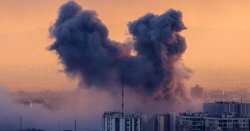
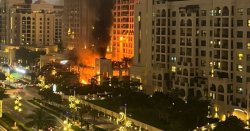
How many will be employed for much longer? The war has lasted just 13 days so far, but the damage is incalculable. It may be a year, possibly two, before business returns to the level of just two weeks ago. And even that depends on the war ending swiftly. Who wants to go anywhere near a war zone, when missiles are hitting airports and hotels, and where the sound of sirens fills the night air?
Read more: 'Rachel Reeves adds yet another Labour failure to her shameful record'
Read more: 'I pity Alastair Campbell and Rory Stewart for one terrible affliction'
And it’s not just about tourists either. It’s business generally. Since 2014, I’ve travelled to Bahrain on business at least four or five times a year, usually two weeks at a time. I was due to go at least six times this year too.
But not anymore, with the Foreign Office warning against all but essential travel. And I’m just one of thousands of businesspeople, possibly hundreds of thousands, in that position.
It means none of us will be staying in the region’s hotels, using taxis, eating in restaurants or shopping in malls. For the foreseeable future, it’s all gone.
And it’ll be the small guy and girl who suffers the most, like the drivers, waiters, waitresses, cleaners, porters and security guards – the people who keep the whole show on the road and are often their family’s sole breadwinner. It’s appalling. How many familiar faces will be gone next time I arrive, whenever that is?
The only silver lining to this black cloud hanging over a region accustomed to endless blue skies is this: the threat to the economy is so great; for many businesses, so existential; and, for many workers, so devastating, that there is a huge incentive for Iran’s neighbours to see an end to the war as soon as possible.
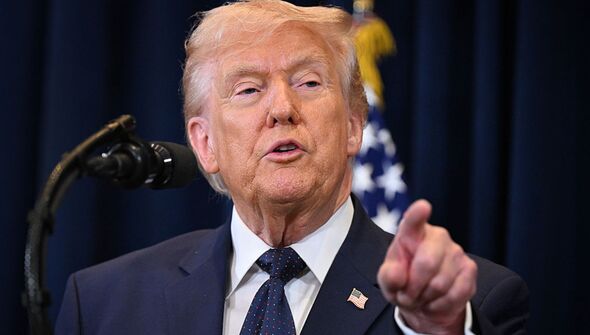
It may be in Donald Trump’s interests to pummel Iran till the last vestiges of the old regime are wiped from the face of the earth. That’s almost certainly Israel’s intention too. But for Bahrain, the Emirates, Kuwait, Oman and even Saudi Arabia, business as usual cannot come soon enough, and you can be sure they’ll put as much pressure on Trump as they can muster.
It’s only six years since Covid, which itself had a devastating impact on the Middle East. To take Bahrain as an example, the economy contracted by a whopping 6% in 2020, she became the most indebted country in the whole region, and the deficit widened to 13% of GDP.
Now, just when the Middle East is on the path to recovery, everything gets shut down again. And for the millions of families whose livelihoods are threatened, this is a grievous blow from which, this time, they might well not recover. For their sake, if nothing else, let’s pray for a return to normality as soon as possible.