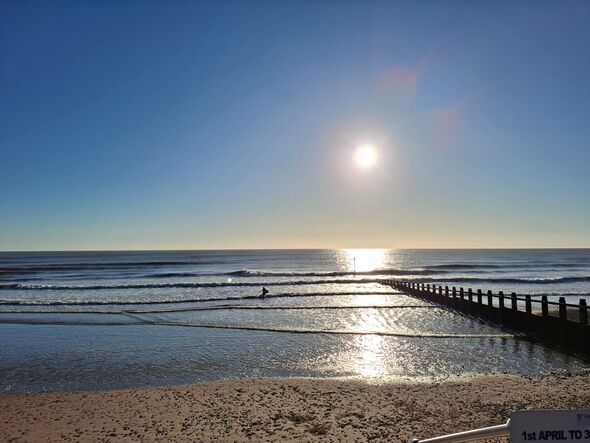

A beautiful seaside town loved by locals and tourists was recently featured in a well-watched docu-drama — but for all the wrong reasons. Dawlish is without doubt a stunning Devon location for holidaymakers, however, swimming in the sea could be risky if storm overflows are activated, as raw sewage can spill into the water - and there are five such outlets in and around the town.
I recently watched Dirty Business, which highlights the issues of untreated sewage often being released into rivers and seas all around and within the UK. As a sea swimmer myself I can vouch for how depressing that fact is. I keep a careful eye on the free Safer Seas and River Service (SSRS) app which shares alerts and details on sewage discharges. Getting into open water in wild spaces is good for mental wellbeing, but not if you later realise that raw sewage was released nearby.
READ MORE: Pretty UK village with abandoned new-build homes boarded up
READ MORE: I live in one of UK’s ‘most deprived' cities — centre looks like a building site
Dirty Business highlighted the potential health issues of swimming in contaminated water, including the sad death of eight-year-old Heather Preen in 1999 from an E-Coli infection. The child and her family had been holidaying in Dawlish.
While the source of the young girl’s fatal E-Coli infection could not be proven to stem from contact with polluted water, many considered it likely that she possibly came into contact with sewage - and the outcome was tragic.
Last summer I visited Dawlish. I'm very fond of the Devon town, it’s a charming traditional seaside place with independent shops and a promenade along the coast. However, in 2026 so far there have been dozens of occasions when storm overflows have been activated, with some discharging sewage for hours, according to SSRS data.
In recent years sewage systems have been "under increased pressure due to rapid growth" in Dawlish. This thriving seaside resort has “doubled in size” after a new housing development was built — something I often ponder, as thousands of new homes around the country must be adding to an already strained sewerage system.

As thousands of new homes spring up around Dawlish and the surrounding area, and more homes use the sewers, wastewater networks are taking the brunt.
The issue of sewage overflows worries locals and visitors, whether they are entering the water or considering the impact on wildlife, but officials are taking action in the town with South West Water (SWW) reporting "strong progress in Dawlish as part of our £760m Turning the Tide programme".
When I visited last August, SWW had begun constructing a huge underground tank beneath the green area in the town known as The Lawn, to try and stop the spills going into the sea.
This huge tank is well underway now, with a completion date for May 2026, its aim is to to “tackle sewage pollution”.
Martin Wrigley, Liberal Democrat MP for Newton Abbot, has lived in Teignbridge (the local government district in Devon where Dawlish is situated) for over 25 years and is passionate about the area.
He shared his thoughts on recent issues highlighted in Dirty Business, saying the “programme has brought back the trauma of the sad death of 8-year-old Heather Preen in 1999”.

The MP added: “Locally there wasn’t any confirmed knowledge of the source of the E-Coli, and several options were considered.
“South West Water (SWW) did instigate an upgrade to the systems including building the sewage treatment scheme in Dawlish completed in the year 2000, so it was recognised that the systems needed significant improvement prior to the tragic death.”
Now, the new tank will help SWW separate foul water and rainwater runoff. When the work is completed, hopefully, only rainwater will head toward the sea.
Martin explained the current status of the work in Dawlish to me: “The current upgrades appear to be progressing well, and as far as I know are on schedule to finish in the summer.
“The works have caused huge disruption in Dawlish, and have coincided with significant gas pipeline upgrades too, causing traffic chaos in the town.
“However, the end benefit of improved water quality is very much welcomed, and whilst the teams doing the work have been considerate, the town will be pleased to see it all finished.”
The upheaval caused by the huge project in Dawlish has upset and stressed locals, but the run-off tank is expected to greatly benefit the town in the long run.
However, Martin also told me: “We still do have issues with some of the drainage pipes for the new housing – separate from the storm overflow reduction work, and look forward to SWW fixing that as quickly as they can.”

Councillor Rosie Dawson of the Liberal Democrats represents the parish of Dawlish and the Teignbridge district. She said: “Given the history with water management in our area, we are eagerly awaiting completion of the vast tank scheme this Spring in order to safeguard the public and our environment.
“Contractors have worked hard and residents and businesses have endured much hardship over the last year of work and we welcome this investment and hopefully many more busy and safe summer seasons to come.
“I am assured that authorities will be watching and working with SWW to ensure this scheme is successful and safely managed going forward.”
A Devon County Council spokesperson said: “We commend the work being carried out by South West Water to upgrade their old, combined drainage network with the removal of surface water from their system.
“This reduces the volume being conveyed to treatment and ultimately reduces the likelihood and frequency of discharge from the combined sewage outfalls.”

South West Water is developing “huge new storm tanks that will help improve bathing water quality in Dawlish”, an update on their website explains that this “major project will help hold around 4.5 million litres of wastewater and rainwater at times of heavy flow, helping to prevent spills from storm overflows.”
A spokesperson told me: "We’re making strong progress in Dawlish as part of our £760m Turning the Tide programme, the region’s biggest investment in reducing storm overflows.
"Two new storm tanks are being built, each able to store excess rainwater during storms. This means less pressure on the system, fewer storm overflow releases and in turn cleaner local bathing water. We've also completed two phases of new sewer installations for housing developments in the area, with the final phase currently under way.
"We are grateful to residents and businesses for their patience as our teams work hard to minimise disruption, and the programme remains on track for completion by May 2026."
Speaking about the tragic death of Heather in 1999, a SWW spokesperson said: "The loss of a child is a devastating tragedy, and our thoughts remain with her family."
"A full multi‑agency investigation found no evidence linking the E. coli infection to storm overflows or bathing water quality."
On its online news page, the water company explained that storm overflows are like emergency valves on the wastewater network. At times of high flow, the sewers can become overwhelmed. This usually happens because heavy rain has added volume to the system. Overflows operate to prevent waste from backing up into homes and neighbourhoods.
“We can’t simply remove storm overflows, because this would make it much more likely that wastewater would spill into people’s homes and neighbourhoods at times of very high flow in the system," it explained.
“Instead, we’re making it much less likely that they’ll be needed through measures like adding more wastewater storage, increasing treatment capacity or keeping surface water out of the system.
“In Dawlish, we decided the best solution would combine more stormwater storage with measures to keep surface water out of the system.”
South West Water began its Clean Sweep initiative in the 1990s. Before Clean Sweep, around 90% of Devon and Cornwall’s sewage went straight into rivers and seas untreated. Investment of £13 billion during the 1990s and spanning over two decades (until 2010), reportedly brought major improvements.