 EPA
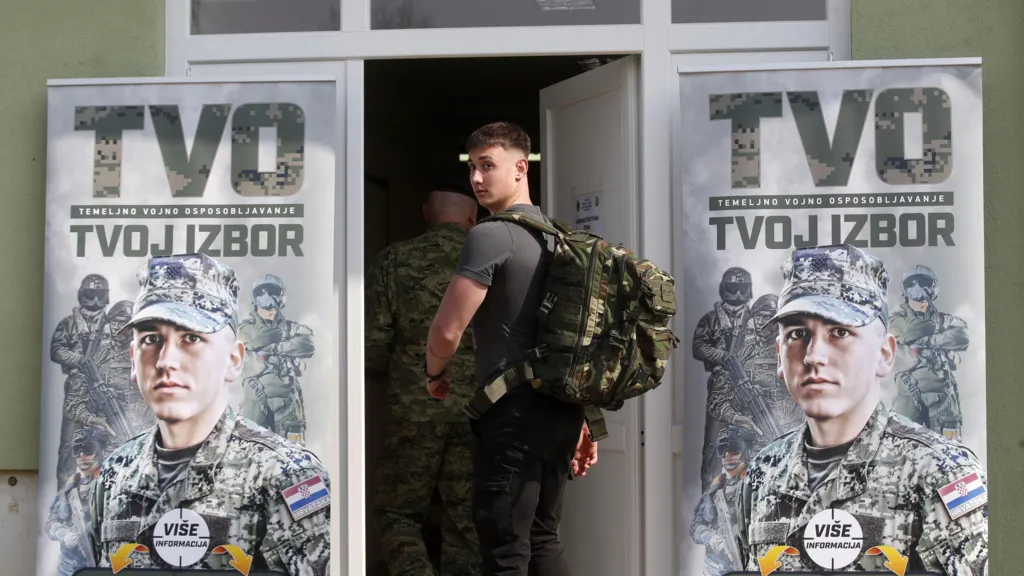
EPAHundreds of teenage Croatians have reported for compulsory military service – for the first time since their country scrapped the requirement in 2008.
Training will take place at barracks in three locations around Croatia, with recruits expected to report to the facility nearest to their homes.
There, they will receive their kit and dormitory assignments. For the next two months, they will have to submit to military discipline.
"They have now been torn from the civilian environment," said Tihomir Kundid, Chief of the General Staff of the Armed Forces of Croatia.
In case that sounded rather brutal, the general was quick to reassure any anxious parents that their offspring would be handled with care.
"We will acclimatise them step by step, so that they do not experience too much stress," he added.
Many among the recruits will also be relieved to hear that there are "no special restrictions" on mobile phones, beyond a ban on using them during training.
Around 800 people are in the first batch of conscripts. Notably, more than half of them did not wait for their call-up papers, but volunteered for service. One in ten are women, who are under no obligation to serve.
Croatian officials have also been keen to point out that just 10 people have so far registered as conscientious objectors. They will have to spend four months in civilian service instead – receiving less than half the €1,100 (£953; $1,273) monthly allowance granted to military recruits.
General Kundid promises a "very dynamic, very interesting" programme for the conscripts. Training will cover everything from traditional skills through to "basic drone control and drone protection skills" and cyberwarfare techniques and countermeasures.
The uncomfortable proximity of the war in Ukraine prompted Croatia's move to reinstate compulsory military service. Only Hungary separates Croatia from the conflict.
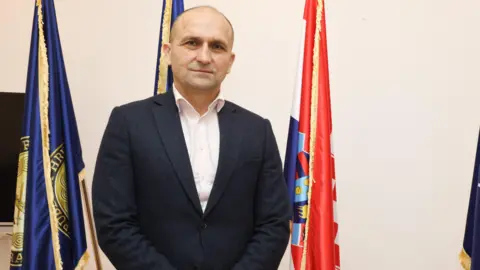
"The situation in Croatia and all around our neighbourhood was stable. Right now, it's completely different," Croatia's Defence Minister, Ivan Anusic, tells the BBC.
"For four years now, we've been looking at not just the Russian aggression in Ukraine, but the proxies of Russia all around Europe doing their jobs."
Where Croatia leads, its neighbours may follow. Ahead of this month's parliamentary elections, Slovenia's largest opposition party has been pushing a return to conscription.
Meanwhile Serbia's president, Aleksandar Vucic, has announced that military service will return within the next 12 months. The country has also significantly increased military spending.
That is jangling nerves in Kosovo and Bosnia. In turn, Serbia has voiced its alarm about Croatia's new military alliance with Kosovo and Albania.
"Any military development in the Balkans just makes the whole region far less secure because everyone reads it as being aimed against them," says James Ker-Lindsay, an analyst specialising in the Balkans and international conflict.
"The problem is that Croatia has been arming. And of course, when Croatia buys arms, then Serbia looks at it and thinks we need to as well."
But Croatia's conscription drive is already in motion. There should be three more intakes before the end of this year, with a target of training 4,000 recruits every year from now on.
Croatia is one of 10 Nato countries who have brought back mandatory military service, joining Greece, Turkey, the Scandinavian countries and the Baltics.