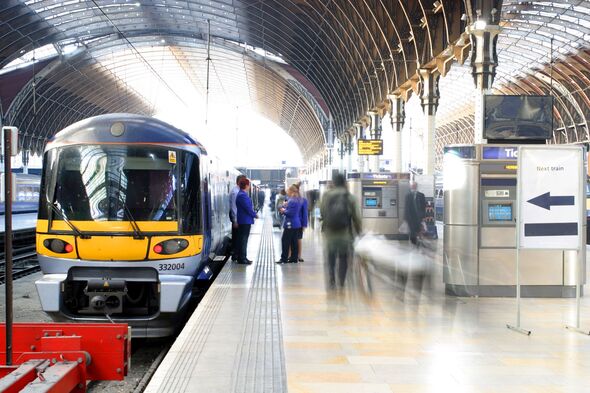

Climate change is driving more train delays and cancellations for Brits, according to new research. Analysis by the Round Our Way organisation found that disruption linked to flooding has gone up by more than 50% in a decade.
There were 55 minutes lost for every million train journeys as a result of extreme rain in the mid-2010s, but the figure now stands at 87 minutes per million journeys. Meanwhile, there were 2,102 flood-related train cancellations last year, the research showed.
Gemma Plumb, a meteorologist at Weather Change, said: “It's clear that train users are seeing more and more disruption to their journeys as a result of heavy rain and flooding, which is hugely frustrating for people who rely on the train network to get around.
“We know that climate change is leading to more extreme weather, including more intense rainfall. This is because a warmer atmosphere can hold more moisture, so when it rains, it rains more."
Train operators in Scotland, Northern England and the South West have seen the highest total climate-related cancellations.
Sofie Jenkinson, co-director at Round Our Way, added: “The rail network appears to be under persistent weather stress as climate change has started to have more regular impacts.
“This causes significantly more delays to train passengers. But it is also a problem for rail operators, particularly the large inter-city train operators running services into regions of the country that are worst hit by flooding, like the South West, Scotland and Wales.
“The significant rise in delays shows the increased impact of extreme weather caused by climate change, raising concerns about safety beneath the surface of our creaking rail infrastructure for passengers and operators alike.
“We are not prepared for the impact that climate change is already having on ordinary Brits’ way of life.
"There are political consequences to this lack of preparedness that will be felt at national, regional and local levels.
"It’s clear that long-term resilience planning and investments are essential if we want to keep the rail network moving, and for future-proofing our country alongside ongoing efforts to bring down emissions.
“We are all sadly getting very familiar with the impact climate change-driven extreme weather is having on the country. This is worrying but it is also fixable.
"Politicians need to show leadership to better prepare us for weather extremes and challenge the companies profiting from pollution which creates these impacts in the first place."
The decade 2015-2024 has been 2% wetter than 1991–2020 and 10% wetter than 1961–1990, according to the Met Office.
Every one degree of global warming is projected to cause a 7% increase in extreme daily rainfall, according to the World Meteorological Organisation.

18 PerFlyer