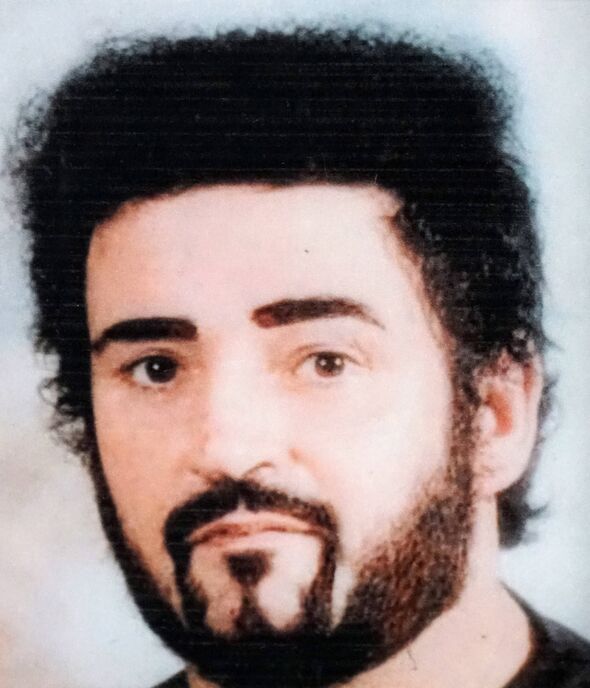

In 1975, a sinister predator prowled the streets of northern England, claiming the lives of 13 women in a wave of brutality that horrified the nation. Over five years, terror steadily mounted as he escaped justice, attacking repeatedly whilst police fought to apprehend him.
When he was ultimately detained in 1981, investigators revealed a disturbing explanation of how he rationalised his actions. Concealed in full view as a husband and lorry driver within a tight-knit community was Peter Sutcliffe, the serial murderer dubbed the "Yorkshire Ripper".
Read more: True crime doc perfect for fans of 24 Hours in Police Custody fans airs tonight
Read more: killer's 3-word reply as he's jailed for arson attack on elderly couple

Peter William Sutcliffe was born in Shipley, West Yorkshire, on June 2, 1946, to parents John William Sutcliffe and Kathleen Coonan and was one of six siblings. According to The Standard, "Sutcliffe's parents had an exceptionally unhappy marriage.
"His father was a violent man and a drunkard, who once smashed a glass over Sutcliffe's head on Christmas for sitting in his chair. Sutcliffe was five at the time."
Because of this, Peter deeply idolised his mother. Kathleen was brought up in Connemara, Ireland, and was a Roman Catholic. She brought up her children in the faith, and Peter even served as an altar boy.
At 15, Peter left school and undertook a succession of roles in the Bradford area, including two periods as a gravedigger, ITV News reported. In a report published on Gov.UK, during the years of his admitted offences, Peter was initially employed as a tyre fitter and subsequently as a heavy goods vehicle driver, and eventually as a lorry driver.
He wed Sonia Szurma on April 10, 1974. The couple initially resided at her parents' home in Clayton before relocating on September 26, 1977, to a detached property he purchased in Heaton, Bradford.

During Channel 5's documentary series, Crimes That Shook Britain (2013), his brother Carl described him as a "really nice guy" whilst growing up, likening him to a "father-figure."
He further recalled: "We used to socialise, not too often because there was a big age gap between us.
"Occasionally, I would go grab a pint with him, and he would take me around seedy bars in Bradford, always having his eye open for other women, which was quite bizarre as he hadn't been married very long, and he was always trying to look out for the girls, but he never mentioned doing anything violent to them. He used to say 'she's a bit of alright' like most, I suppose, blokes do."
According to ITV, Peter's violent tendencies emerged in Bradford in 1969, when he struck a sex worker with a stone concealed in a sock. She survived and chose not to press charges.
Six years later, he launched a hammer attack on Anna Rogulskyj, slashing her abdomen, fleeing only after a neighbour disturbed him.

In 1975, he targeted two further victims, amongst them 14-year-old Tracy Browne, who required brain surgery. Later that same year, he committed his first murder.
In 1975, Peter claimed his first two victims, Wilma McCann and Emily Jackson, in Chapeltown, then known as Leeds' principal red-light district, reported the BBC.
Peter's assaults were savage; he employed a range of implements and techniques, though he almost invariably commenced his attacks by striking victims from behind with a hammer to disable them.
Wilma McCann, a mother of four, was struck on the head with a hammer and stabbed repeatedly on a football pitch just 90 metres from her residence. She was found the following morning by a milkman.

Three months afterwards, Emily Jackson was discovered dead in a factory field in the same city, with multiple stab wounds. He was initially dubbed the "prostitute killer" by police, who believed the serial killer was exclusively targeting sex workers.
This subsequently changed following the death of 16-year-old Jayne MacDonald. On June 26, 1977, in Leeds, Jayne was walking home from an evening out when Sutcliffe followed her to a local playground on Reginald Street.
He struck her three times on the head with a hammer, causing her to collapse, then dragged her approximately 20 yards into the darkness of the playground. There, he stabbed her over 20 times in the chest and back.
According to Crime and Investigation, the timeline of murders is as follows:

According to The Guardian: "Sutcliffe escaped justice for so long owing to a mixture of bad luck and incompetent policing, with many early clues missed. A total of 40,000 interviews were conducted during the hunt, and Sutcliffe was interviewed at least five times by the police. But he lied his way out of trouble each time."
On January 2, 1981, Sutcliffe was apprehended after a police officer noticed him with a woman and uncovered false number plates. Initially giving the name Peter Williams, Sutcliffe was held overnight. His blood type B and similarity to the Ripper profile aroused suspicion.
A few days later, on January 4, Sutcliffe admitted to his crimes in a 15-hour statement. He maintained that back when he was a 20-year-old gravedigger, the voice of god had commanded him to kill prostitutes, as reported by Crime and Investigation.

"After his arrest and confession, he claimed he felt he was on a 'divine mission' to eliminate sex workers and that 'everything was in God's hands'. He told his brother Carl: 'I were just cleaning up the streets'," detailed The Guardian.
When arrested, Sutcliffe hoped claims of insanity would reduce his sentence, but a jury found him guilty of 13 murders and seven attempted murders, handing him 20 life terms with a minimum of 30 years.
Diagnosed with paranoid schizophrenia in 1984, he was moved to Broadmoor Hospital, where he maintained eccentric habits, including wearing a velvet suit in the visiting room.
In 2009, the High Court determined he should remain imprisoned indefinitely, a ruling confirmed on appeal the subsequent year. Nevertheless, in 2020, aged 74, the serial killer died after contracting COVID-19.