 BBC
BBCIn the winter of 2022, a group of about 10 couples gathered at a golf club in Sussex. They didn't know each other, but they had one thing in common - they were all expecting their first child and attending antenatal classes.
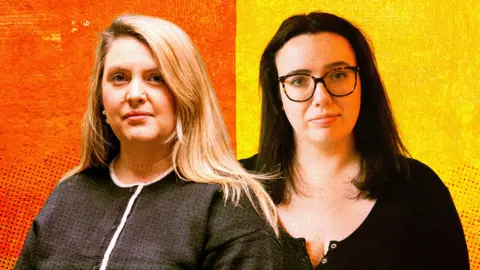
Among the group were Beth Cooper and Sophie Hartley and their partners, Tom and Joe. The two couples had much in common - both were expecting sons, and both had decided on the name of Felix.
Within weeks, however, the couples' nerves and excitement turned to pain and anger. Both had to cope with the loss of their babies, while under the care of the University Hospitals Sussex NHS Foundation Trust (UH Sussex).
A joint BBC News/New Statesman investigation into maternity care at the trust has unearthed their stories.
Last June, Health Secretary Wes Streeting announced an independent investigation into maternity care at UH Sussex, initially set to examine nine cases since the trust was set up in 2021. We have learned this will now be expanded to 15 families and include the parents of the two boys named Felix.
We have also become aware of at least eight other families, whose care is not part of the investigation, who have significant questions about the trust's maternity services.
Our investigation also found that:
"The trust does a good job of persuading people that nothing could have been done," says Katie Fowler, who lost her daughter Abigail in 2022 due to poor care and who helps coordinate Truth for Our Babies, a group set up by bereaved parents concerned about standards at UH Sussex.
"I think there will be cases where parents may not realise that their child could have been saved."
An analysis of clinical negligence payments also shows the trust paid out £103.8m for maternity errors between 2021-2025 - including £34.3m paid out in 2024/25, the highest amount in England that year.
For context, the Nottingham University Hospitals Trust, which is at the centre of the largest maternity inquiry in the history of the NHS, paid out half that total in the same period.
In a statement, UH Sussex said its mortality rates for the past three years were "markedly below national rates" and that, as one of the larger NHS trusts in England, it would expect to be associated with higher levels of negligence claims. "Our goal is to provide the safest possible maternity care," it added.
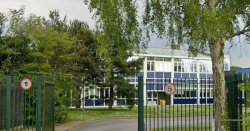
Both the babies named Felix were born at the Princess Royal Hospital in Haywards Heath, one of four hospitals the trust operates.
In the week running up to giving birth, Beth says she went to the hospital on three consecutive days. Each time, she reported reduced movements of her baby. Beth herself couldn't eat, was vomiting and suffering from headaches.
As a neonatal nursery nurse who had worked at the Princess Royal, she says "it was really obvious to me that something wasn't right". On each occasion, she was attached to a CTG machine which monitors a baby's heart rate, and Beth says she was assured her baby was fine and told to go home.
"I think the most common theme I found with the staff was 'is this your first baby? Oh, you're just anxious,'" she says.
On Christmas Eve, Beth could not feel even "occasional movement", so for the fourth time that week, she went back to the hospital.
This time the staff couldn't find Felix's heartbeat, and his parents were told he had died. "It was absolutely horrendous," she says.
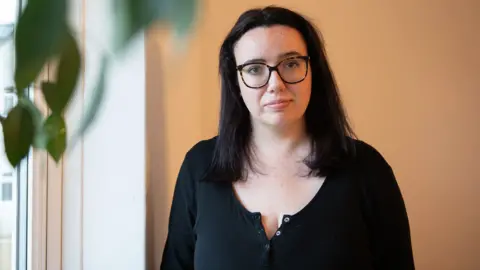
Despite being told to go home for a few days, Beth insisted on returning the next day to deliver her still-born son by C-section.
The couples who had met at the golf course had set up a WhatsApp group and, a few days later, Beth and Tom messaged the group informing them of Felix's death.
"They sent a photo of them holding his hand," recalls Sophie. "I cried for them. I actually had to delete the post because I just couldn't look at it anymore."
In February 2023, when she was almost 42 weeks pregnant, Sophie discharged a dark substance which she thought was meconium, a baby's first stool. It can lead to breathing difficulties for a baby if it is passed before birth.
Sophie says she called the Princess Royal Hospital "at least 30 times" before someone answered. She was invited in and says that a midwife undertook a well-being check on her but didn't monitor her baby. She was then sent home.
By 02:30 the next morning, Sophie had gone into labour with regular contractions and was struggling to cope.
Once more she called the Princess Royal. She says a midwife told her: "You sound like you're doing well. We advise you to stay home as long as possible."
Sophie dozed off and woke up about 07:00 and was immediately concerned about a lack of movement. This time, she called the hospital and said she was coming in.
After several delays, staff tried unsuccessfully to find Felix's heartbeat. Sophie was given a general anaesthetic and Felix was delivered by emergency C-section. He wasn't breathing, however. Staff struggled to resuscitate him and Felix died the following day.
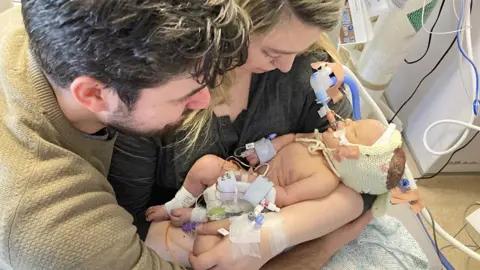 Sophie Hartley
An inquest into his death found he had been without a heartbeat for about 20 minutes prior to his birth and that he had had an infection, chorioamnionitis, that would have impacted his ability to withstand the lack of oxygen.
An independent investigation was carried out by the Healthcare Safety Investigation Branch (HSIB), the body that investigates patient safety concerns across the NHS in England.
It found a number of problems with the maternity care provided, including the failure by an obstetrician to review Sophie at several times during her pregnancy and, most crucially, mistakes in the hours before Felix's birth that could have saved him.
"'There's no hope,'" Sophie recalls being told. She says her son had gone without oxygen "for too long".
"Having just woken up [from the operation]… I was told my life was being ripped apart."
The trust says it has now introduced a new telephone triage service with experienced midwives "purely tasked with making decisions as to when to bring women into hospital".
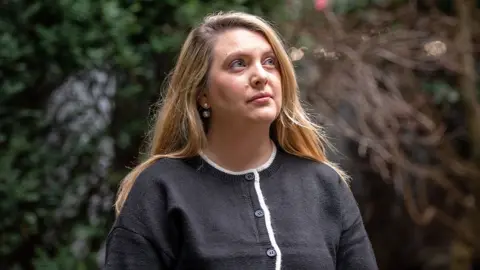
Meanwhile, Beth is still fighting the trust, three years after her son died. Like several other families we spoke to, she was discouraged from having a post-mortem, leaving the cause of Felix's death unknown.
An internal trust review identified some care issues but concluded they would have made "no difference to the outcome for the baby" - a conclusion Beth hopes the upcoming investigation will challenge.
Between 2019 and 2023, UH Sussex carried out 227 internal hospital reviews into maternity deaths - known as Perinatal Mortality Review Tools (PMRTs). This was revealed in a Freedom of Information (FOI) request made by Truth for Our Babies.
At least 55 cases were given grades of C or D by the trust, indicating that different care either "may" have or was "likely" to have made a difference to the outcome.
The reviews are likely to have included nine antenatal stillbirths that occurred between July 2021 and February 2022 at Worthing Hospital, which is also run by UH Sussex trust.
There had been "missed opportunities in all cases", concluded a 2022 review of the deaths (also obtained after a FOI request by Truth for Our Babies).
The review's timeline indicates it would probably have analysed the case of Chloe Vowels-Lovett, whose baby, Esme, was stillborn at 38 weeks' gestation in February 2022.
Chloe had repeatedly gone to Worthing Hospital in the previous weeks, telling staff she was in agonising pain and that her unborn baby's movements had significantly reduced.
"I did everything I could to have my voice heard. I begged them to induce me. They didn't want to believe that I knew what was right in my body," says Chloe. The trust has admitted care failings in Esme's case.
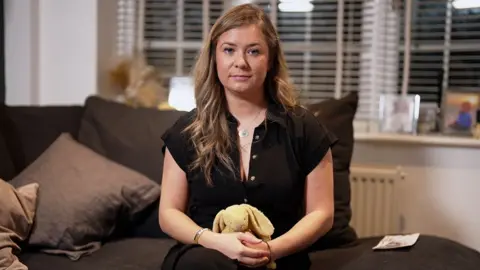
A common theme among the 15 families who make up Truth for Our Babies is that UH Sussex did not listen to maternal concerns, either before birth or during labour.
They also feel there was a reluctance to carry out C-section births - an issue linked by some maternity safety campaigners to an unhealthy focus on "normal births", which are vaginal deliveries without any medical intervention.
The BBC News/New Statesman investigation has found evidence that prior to the trust's creation in 2021, its predecessor organisations - Western Sussex Hospitals, and Brighton and Sussex University Hospitals - promoted this policy, as did much of the NHS.
In February 2018, directors at Western Sussex NHS Trust stated that "increasing normal birth continues to be an area of focus".
In 2019, HSIB sent a "Letter of Concern" to Brighton and Sussex University Hospitals, warning of the adverse consequences of a "focus on normality".
UH Sussex said that it has "consistently supported maternal requests for C-sections" and that its caesarean rates are higher than the national rate.
The scope of the government's review into maternity care in Sussex – announced by the health secretary - is yet to be agreed, as is the chairperson. The families are adamant they want the senior midwife, Donna Ockenden, to lead it. Wes Streeting is opposed to her involvement, however.
A spokesperson for the Department of Health and Social Care said it was "actively working with families in Sussex to appoint a chair and agree terms of reference for this vital review".
Responding to our investigation, Dr Andy Heeps, chief executive of UH Sussex, addressed the families who lost a child.
"I want to say directly that we did not always get this right," he says. "As chief executive, I take responsibility for that, and I am deeply sorry for the pain and distress that you experienced."
The trust, he said, is now "fully recruited", having hired 40 more midwives.
"We recognise that there will always be more we can do to improve," says Heeps, adding that he hopes the maternity investigation into his trust will "help answer these families' questions and drive further improvements".