 ODAIT
ODAITAn additional 22 sets of infant human remains have been recovered from the site of the former institution for unmarried mothers and their children in Tuam in County Galway.
This brings the total number of human remains recovered to 33.
The institution at Tuam came to international attention in 2014, after local historian Catherine Corless discovered there were 796 death certificates for children and babies who died there, but no burial records.
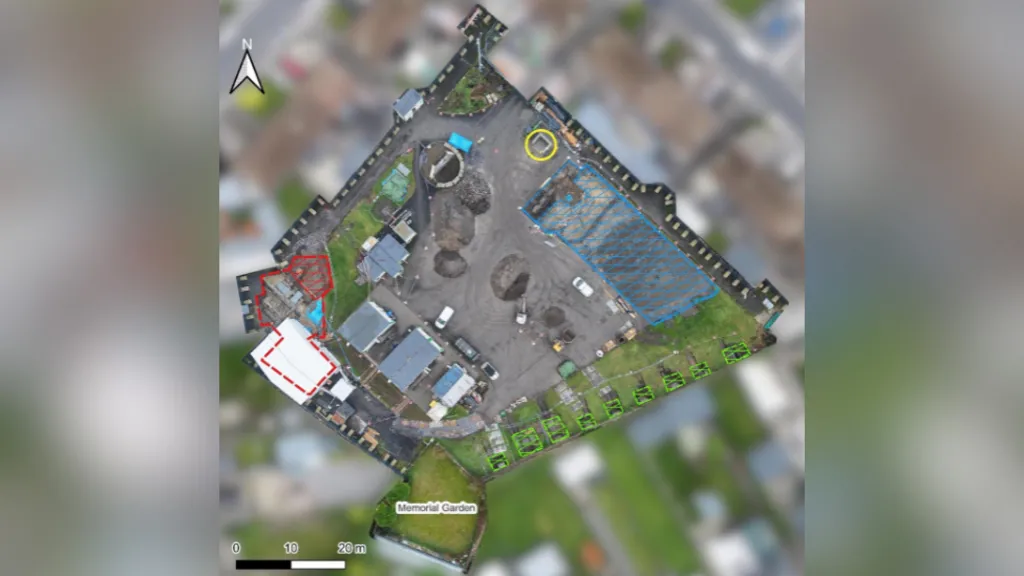
Hand excavation has continued under an area identified in historical documents as a "burial ground".
To date, all remains recovered from this area are of infants that were buried in coffins.
Forensic analysis is underway.
All were buried there during the period that the home operated in Tuam, between 1925 and 1961.
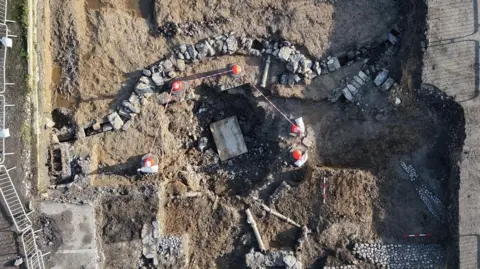
The Office of the Director of Authorised Intervention in Tuam (ODAIT) also uncovered a pit (over three metres in width; depth will be determined on excavation) which disturbed the "burial ground".
It contains modern building debris consistent with the post-institutional era.
In an update on Friday, the ODAIT said the latest evidence uncovered related to the period from 29 November 2025 to 28 January 2026.
 ODAIT
ODAITIn the former yard area, the entire area is now forensically resolved (shown in blue) apart from the well shaft and connected drains where work continues.
The ODAIT said a total of 28 DNA samples have been taken from relatives of those who died in the home.
To date, over 65 cases are being processed for determination of eligibility, with arrangements being made to take their samples in the coming weeks.
 ODAIT
ODAITThe institution at Tuam was owned by Galway County Council and run by a religious order, the Bon Secours Sisters.
The order has previously acknowledged that children and infants were "buried in a disrespectful and unacceptable way", and apologised.
It has contributed £2.14m towards the cost of the excavation.
Galway County Council also apologised for "failing mothers and children" after the inquiry report in 2021.
The excavation is expected to continue until 2027, with follow-up work expected to last several more years.