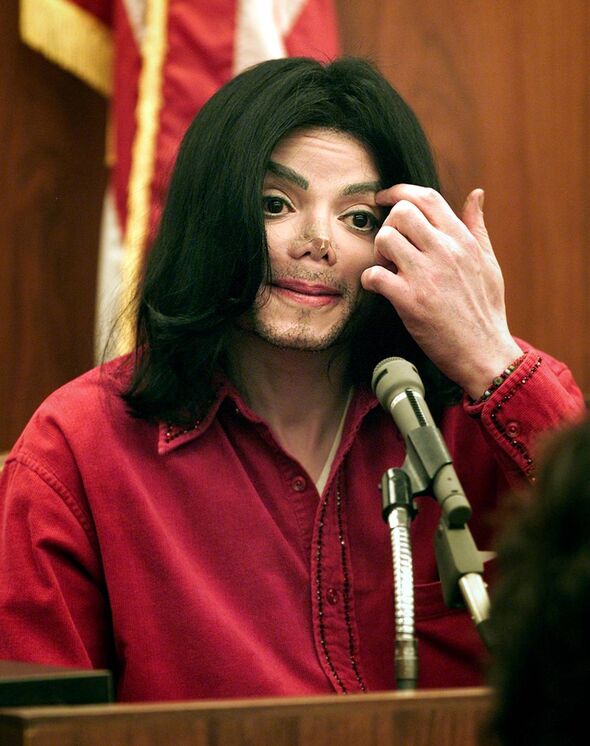

Shocking revelations from Michael Jackson's post-mortem have exposed the true condition of his body beneath the layers of makeup, wigs and prosthetics. The singer was intensely private about his health issues, often refusing to allow doctors access to certain areas of his body. However, his history of cosmetic procedures and undisclosed health problems were laid bare following his death in June 2009.
The contentious star passed away at the age of 50 at his Los Angeles residence due to an overdose of the surgical anaesthetic Propofol. His death was subsequently ruled a homicide, with his personal doctor, Dr Conrad Murray, found guilty of involuntary manslaughter. An autopsy conducted after his death in June 2009 revealed startling details about his plastic surgeries and medical conditions. After years of surgery, prescription medication and a suspected struggle with anorexia, Jackson, who is the focus of Channel 4's new documentary Michael Jackson: The Trial, died weighing just 8st 10lbs. The average weight for a US male is 14st 4lbs, reports the Mirror.

His stomach contained nothing but partially dissolved pills, as he reportedly survived on a single small meal per day.
The comprehensive toxicology report detailed a lethal mix of propofol and benzodiazepines, which resulted in his fatal cardiac arrest. Jackson had puncture marks across his arms, thought to be the result of injections administered to combat chronic insomnia.
His hips, thighs and shoulders were also covered in puncture marks from what were believed to be from painkiller injections. There were also visible traces of the numerous cosmetic surgeries he'd undergone over the years - with two surgical scars behind his ears and two more on either side of his nostrils.
Medical experts determined that many of the marks at the base of his neck and on his arms and wrist resulted from his various procedures.
Read more: The 1 word Paris Jackson banned producers of new film from using...
Read more: Beloved singer and Michael Jackson's co-star dies aged just 58
Beyond the surgical scarring, it emerged that Jackson had undergone unusual cosmetic treatments, including having his lips tattooed pink. His eyebrows were black tattoos and the front of his scalp had also curiously been tattooed black to match his hairline.
The star's knees and shins bore unexplained bruising whilst cuts on his back suggested a recent fall. Yet more surprisingly, his wavy, shoulder-length hair proved to be a wig that had been adhesively attached to his head.
Underneath, Jackson was entirely bald save for patches of 'peach fuzz' on his scarred scalp. "He was skin and bone, his hair had fallen out, and he had been eating nothing but pills when he died," a source close to the singer revealed to The Sun.
"Injection marks all over his body and the disfigurement caused by years of plastic surgery show he'd been in terminal decline for some years."

Jackson is understood to have begun wearing hairpieces following an incident during a 1984 Pepsi advertisement shoot, when his hair ignited, resulting in second and third degree burns. The filming at LA's Shrine Auditorium involved him dancing down a brief staircase whilst fireworks exploded around him.
However, a technical malfunction during the sixth attempt saw the pyrotechnics detonate prematurely, causing sparks to set alight Jackson's heavily styled hair before flames engulfed it. The performer was subsequently stretchered away, with a scorched, hairless area above his left ear plainly visible.
It has frequently been suggested that this incident marked the start of the performer's painkiller dependency.
He received powerful analgesics to manage the severe pain from the burns to his scalp and face, subsequently developing an addiction to prescription drugs - a reliance that would eventually prove fatal. His brother Tito previously revealed to the Mirror: "He had been taking pain medicine because of the burns and evidently he got some kind of addiction from it."
The post-mortem examination also verified the reality behind years of conjecture regarding Jackson's altered skin tone. He had consistently maintained the transformation in his appearance resulted from vitiligo, a skin condition causing patches of pigmentation loss.
His body was indeed marked with areas of both light and dark skin, confirming he did suffer from the condition. Dr Christopher Rogers, the medical examiner who conducted the post-mortem, stated: "Some areas of the skin appear light and others appear dark."
The autopsy further revealed evidence of frantic efforts to revive Jackson following his discovery unconscious at his residence. Bruising to the chest and fractured ribs were attributed to CPR administered by paramedics attempting resuscitation before he was declared dead.
Jackson also had significant issues with his feet, which the pop icon had persistently refused to allow medical professionals to examine. With his legendary dance moves and revolutionary choreography, Michael Jackson's feet were instrumental to his success.
They introduced the world to the Moonwalk when Jackson debuted the technique during a performance of Billie Jean on American television in 1983.
Fiercely protective of his privacy, Jackson would treat himself with painkillers rather than permitting specialists near his celebrated feet. His signature socks served a purpose, with Jackson reportedly concealing the fact his feet were badly deformed.
He endured excruciating callouses and a fungal infection so advanced that it appeared his skin was deteriorating. In his 2016 memoir, This Is It, his disgraced doctor Dr Conrad Murray described Jackson's feet, writing: "(They) were covered in callouses... and had an advanced chronic fungal infection. It turned out he always wore socks because he was so ashamed of the way his feet looked.
"I suggested he needed a podiatrist. A day after his feet were treated, he was amazed he could walk and dance without pain. Later I prescribed anti-fungal medications to clear the infection. It was a complete success. Meanwhile, I personally administered regular lotions and massages to remove the rough skin.
"The fact Michael's feet, something critical to him, were in such poor condition was a sign not only had he neglected himself but those around him were not keeping a close eye on his wellbeing."