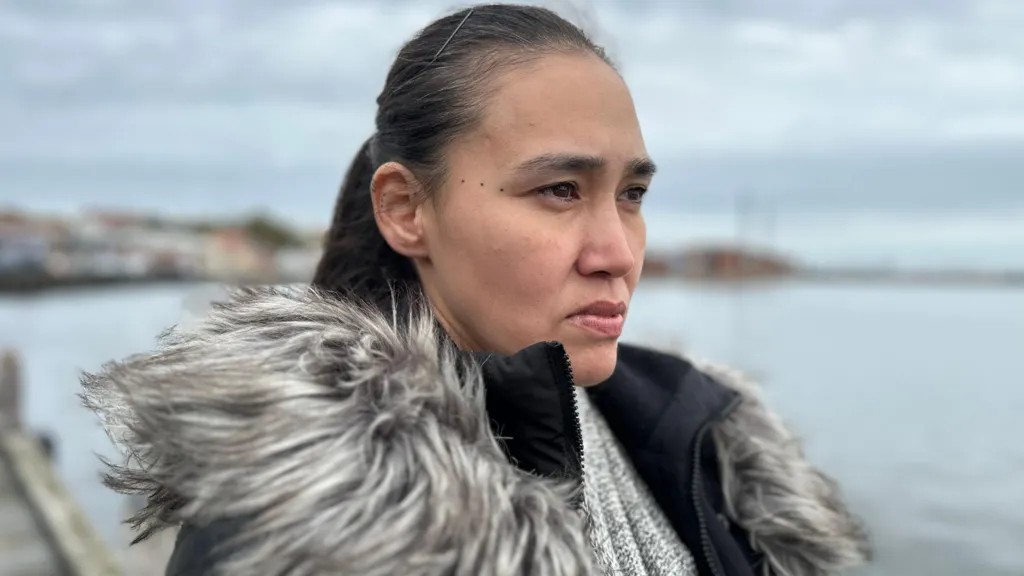
When Keira’s daughter arrived last November she had only a couple of hours with her mother before being placed in foster care.
The 39-year-old describes the moment as devastating and now visits her baby for one hour a week, bringing Greenlandic food and small reminders of home.
Keira is one of many Greenlandic parents living on the Danish mainland who say their children were removed after undergoing formal parental competency assessments known as FKUs.
These evaluations are used in complex welfare cases where authorities fear a child may be at risk.
FKUs involve interviews, personality inventories, cognitive tasks and even projective tests such as Rorschach inkblots.
They can take months to complete and are intended to help social services decide whether parents can meet a child’s needs.
Critics argue the tests are built around Danish cultural references and are delivered in Danish, not Kalaallisut, the native language of most Greenlanders.
That language and cultural gap, they say, can produce misunderstandings and unfairly damage parents’ prospects.
Research from the Danish Centre for Social Research shows Greenlandic parents living in Denmark are 5.6 times more likely than Danish parents to have children removed.
In May the Danish government banned FKUs for Greenlandic families and pledged to review roughly 300 cases where children were taken.
But progress has been slow.
By October only around ten FKU-related cases had been examined and no Greenlandic children had yet been returned to their families as a result of the review.
Those who administer the tests defend them as extensive psychological tools that add objectivity to decisions that otherwise rely on social-worker reports.
Former examiners and some academics counter that parts of the assessments lack scientific validity for predicting parenting ability and carry outsized weight in removal decisions.
Parents describe testing experiences that felt alienating.
Keira says she was asked general-knowledge questions and made to play with a doll while examiners noted her eye contact.
She recalls being told the assessment was to see whether she could “act like a human being,” a remark she found deeply offensive.
Another couple, Johanne and Ulrik, had a son taken after a 2019 assessment while Johanne was pregnant.
The boy was adopted in 2020, and the government says adoption cases will not be reopened under the current review.
The parents, who say the reports labelled Johanne with stigmatizing psychiatric terms, have mounted a legal challenge and are considering the European Court of Human Rights.
There are rare cases of reunification.
Pilunnguaq had a six-year-old daughter returned and is expecting her other children to come home.
But she still struggles with the trauma of years apart and fears the family could be split again at any moment.
Denmark’s social affairs minister says the review aims to determine whether FKUs were administered incorrectly for Greenlandic people, while local social workers stress that removal and adoption decisions go through careful processes and, in permanent cases, judicial approval.
For parents like Keira the uncertainty continues.
She keeps cots and photos at home and is building a traditional sleigh for her daughter’s first birthday.
Despite the long fight ahead, she says she will keep pushing to bring her children back and to challenge a system many feel is stacked against them.